The Dolphins of Trat Bay — Thailand's Rarest Marine Neighbors
Few people know that the waters surrounding Koh Chang and Trat Province are one of the most important dolphin habitats in Southeast Asia. International research from IUCN, National Geographic, and Frontiers in Marine Science all confirm that Trat's waters are home to three endangered dolphin species — all coexisting in the same waters you can see from our beach.
🐬 Irrawaddy Dolphin
Scientific Name: Orcaella brevirostris
IUCN Status: Endangered since 2004
Other Thai Names: Irrawaddy Dolphin
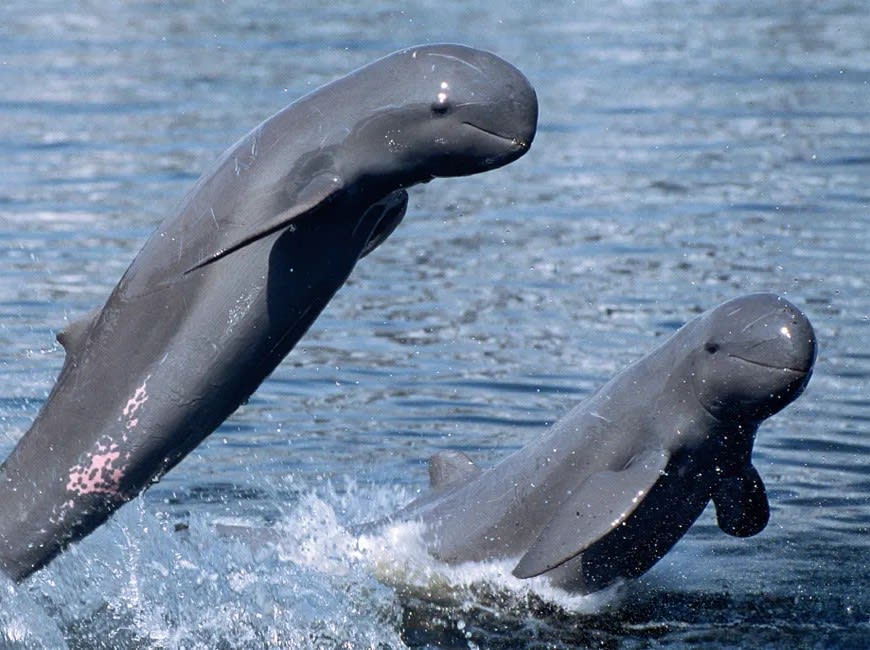
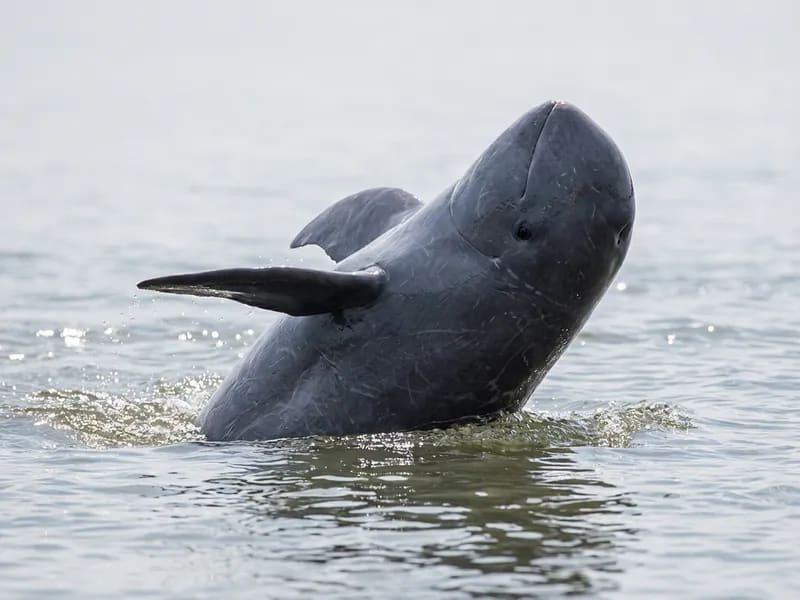
At first glance, you might mistake it for a porpoise, but in fact, the Irrawaddy dolphin is more closely related to killer whales (Orca) than to common bottlenose dolphins — it's a "relative" of one of the ocean's fiercest predators, even though its appearance is cute and unthreatening. The scientific name Orcaella means "little Orca."
Physical Characteristics: Gray or bluish-gray body with a lighter underside, large rounded head without a prominent beak, high bulbous forehead resembling a monk's alms bowl, small and low dorsal fin. Adults measure 1.5–2.75 meters in length and weigh 90–200 kilograms — the largest specimen ever recorded in the world was found in Thailand.
Why Trat Waters Are Special:
A 5-year study by scientists from the Ocean Park Conservation Foundation in collaboration with the National Geographic Society between 2008–2016 surveyed Trat waters from Ban Laem Klat to Khlong Yai, including waters around Koh Chang, Koh Mak, and Koh Kood. They found an average of 423 Irrawaddy dolphins (95% confidence interval: 252–734 individuals). Combined with the population on the Cambodian side (Koh Kong Province), the total population is approximately 500 individuals, making it the second-largest Irrawaddy dolphin population in the world, second only to the Irrawaddy River estuary in Myanmar.
The latest survey in December 2023 by the Department of Marine and Coastal Resources found a pod of 41 Irrawaddy dolphins distributed in groups of 3–8 individuals, foraging along the coast near oyster beds and crab net areas — showing that the population continues to thrive in the area.
Remarkable Behavior:
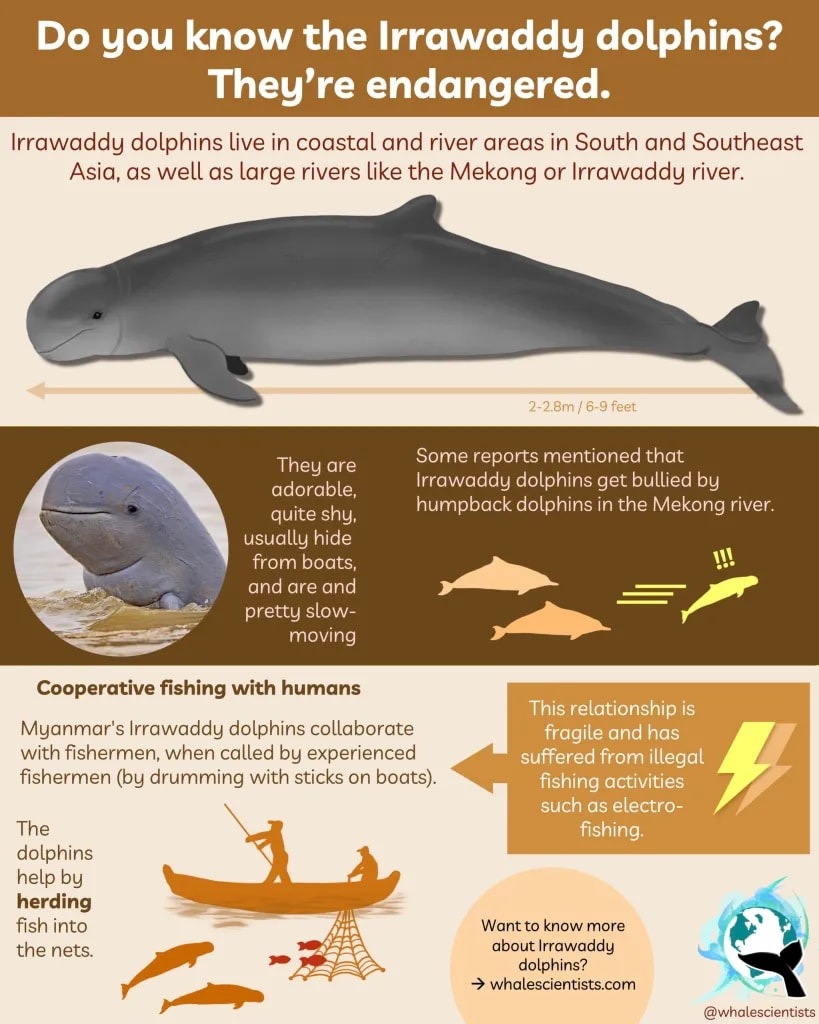
- Water-spitting to herd fish: The Irrawaddy dolphin is one of the few species that uses water as a "hunting tool." It spits water to create a thin curtain that herds schools of fish together before swooping in to feed — behavior that researchers have documented in Trat waters.
- Cooperation with fishermen: In some areas of Myanmar and Bangladesh, Irrawaddy dolphins voluntarily drive fish into fishermen's nets, a mutualistic relationship rarely found in wild animals.
- Flexible neck: Their rounded, flexible heads allow them to turn their heads left and right nearly 90 degrees, unlike other dolphins that must turn their entire bodies.
Threats: Surveys found that 12% of fishermen in Trat have encountered dolphins entangled in nets. Crab nets, gillnets, and fishing nets pose the main threat. Additionally, noise pollution from high-speed boats causes dolphins to dive and hide longer than normal. The Thai and Cambodian governments are discussing a Transboundary Marine Protected Area (MPA) specifically covering the Trat-Koh Kong waters.
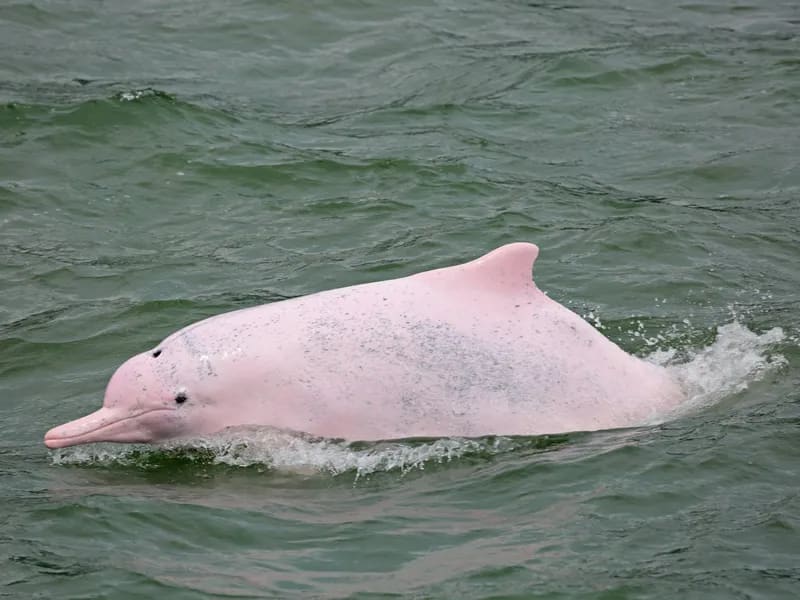
🐬 Indo-Pacific Humpback Dolphin
Scientific Name: Sousa chinensis
IUCN Status: Vulnerable since 2015
Other Names: Chinese White Dolphin
In Hong Kong and China, they're called "Chinese White Dolphins" and serve as Hong Kong's official symbol. They're famous as the pink dolphins swimming near various sea-crossing bridges. But these same dolphins have been living quietly in Trat waters for a long time without anyone knowing.
Age-Related Color Changes — What Most People Don't Know:
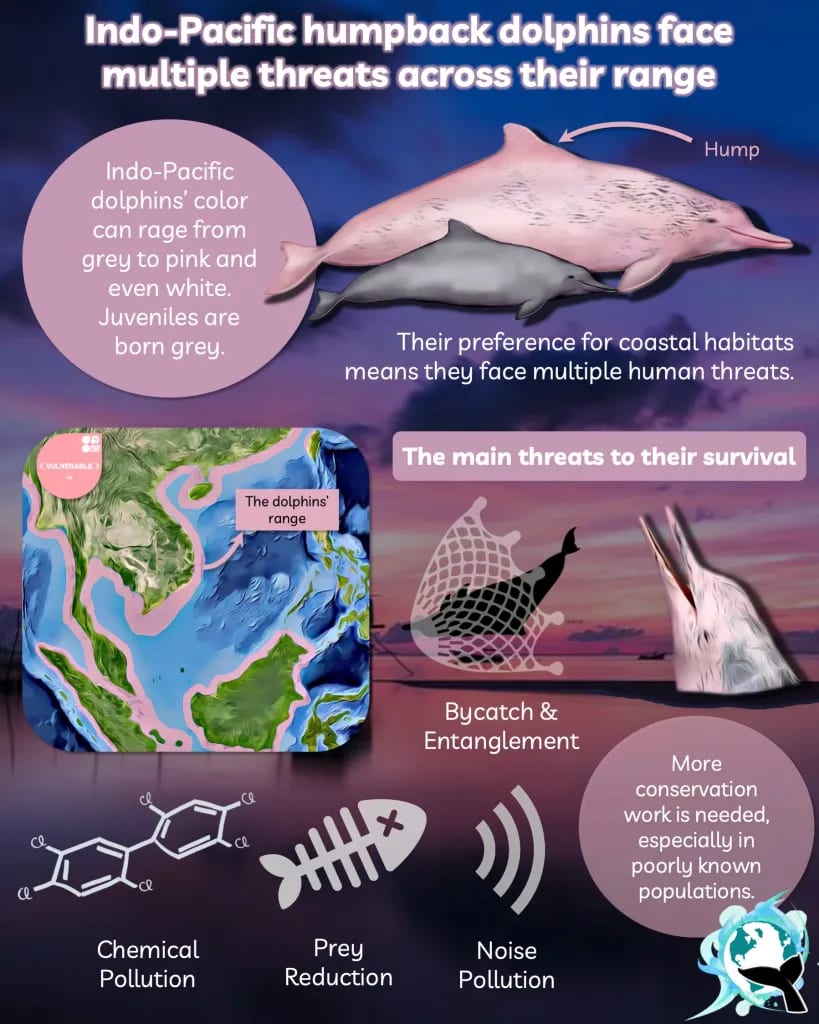
Humpback dolphins aren't born white or pink. They're born dark gray or black, then gradually lighten with spotted patterns during adolescence, and may fade to white or turn pink in old age. The pink color doesn't come from skin pigments but from capillaries dilating to dissipate heat — the higher the temperature, the pinker they get! This makes body color a rough indicator of both age and emotional/stress state.
Physical Characteristics: Have a distinctive hump at the base of the dorsal fin (hence the name "humpback"), prominent long beak. Adults measure 2–3.5 meters in length and weigh 150–230 kilograms, slightly larger than Irrawaddy dolphins. Can live up to 40 years — determined by analyzing tooth rings, like tree rings.
Interesting Behavior:
- Prefer shallow coastal waters no deeper than 30 meters, often found near river mouths and mangroves.
- Live in small groups, usually no more than 10 individuals, unlike other dolphin species that sometimes gather in hundreds.
- Exhibit epimeletic behavior of supporting dead calves documented in Hong Kong — mother dolphins and other pod members will work together to keep deceased calves afloat for days, reflecting deep emotional bonds.
- In December 2023, researchers from Marine Conservation Cambodia observed a pod of humpback dolphins together with an Irrawaddy dolphin mother and calf near a river mouth close to the Thai-Cambodian border — showing that both species sometimes travel and forage together.
Status in Trat: Research by Hines et al. 2015 confirmed the presence of humpback dolphins in Trat waters alongside Irrawaddy dolphins. Although fewer in number, they are a species with continuous presence in the area.
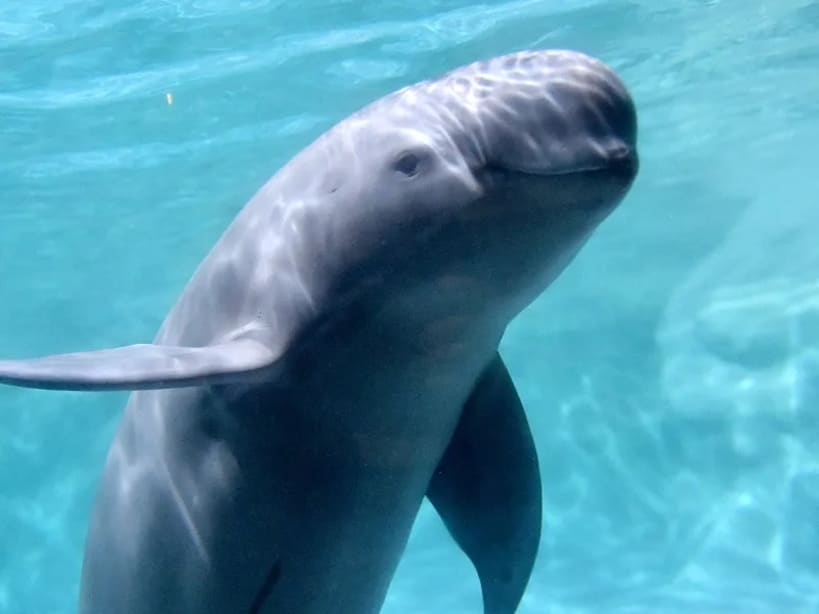
🐬 Indo-Pacific Finless Porpoise
Scientific Name: Neophocaena phocaenoides
IUCN Status: Vulnerable since 2012
Note: Actually a porpoise, not a true dolphin. These two groups diverged evolutionarily 10–15 million years ago.
The most "invisible" marine mammal in Thai waters because it has no dorsal fin, so there's nothing protruding above water for distant observation unlike all dolphins and whales. This means even some fishermen who've spent their entire lives in the area have never known they're nearby.
Physical Characteristics: The smallest of the three species, measuring 1.2–1.9 meters in length and weighing only 30–45 kilograms. Plain gray body without patterns, rounded head, no prominent beak, smooth flat back without a fin, with only small ridges or tubercles in the mid-back area instead of a fin, which in some individuals are barely visible.
Interesting Behavior:
- A warm-blooded animal that can swim in saltwater, brackish water, and freshwater, adapting better than most dolphins.
- Usually found in very small groups, averaging 2–6 individuals, but surveys in Cambodia found larger pods of 8–10 individuals in border areas near Koh Chang.
- Swim very "quietly," surfacing briefly to breathe then disappearing immediately. Don't like to jump or display conspicuous behavior.
- Communicate with high-frequency ultrasound for echolocation to locate prey, but rarely use vocalizations for social communication, earning them the nickname "silent dolphins" from researchers.
Evidence in the Area: Joint IUCN research between Thailand and Cambodia from 2013–2015 found finless porpoises in surveys at the Trat-Koh Kong maritime border, and stranding reports in Trat Province reached 11 incidents over a 5-year period, compared to 31 for Irrawaddy dolphins — these figures indicate they're truly present in the area, we just rarely have the chance to see them.
Sighting Opportunities and Dolphin-Watching Etiquette
All three dolphin species live near the coast, not in the deep sea. Most are found in the southern area of Koh Chang and between Koh Chang and the Trat mainland (not far from Koh Chang). There's some chance of encountering them from boats during travel, but expectations shouldn't be too high.
If you're fortunate enough to encounter dolphins from a boat:
- Maintain a distance of at least 30 meters as required by Thai wildlife protection laws.
- Do not steer the boat directly toward dolphins. Approach should be parallel to their swimming direction, not cutting across or chasing.
- Turn off the engine if dolphins swim toward you voluntarily — let them make the choice.
- Don't throw food or objects into the water.
- Photography is allowed, but avoid using flash.
Facts for Proper Understanding: Encountering dolphins in Trat waters isn't guaranteed — even scientists conducting regular surveys must go out multiple times to find them once. But knowing they're here — swimming in the same waters where we travel — is a wonder in itself.
🌊 Trat Waters: A Natural Heritage in Need of Help
The Irrawaddy dolphin population of 423–500 individuals in Trat waters is cause for celebration. But the figure of over 65 strandings in the 3 years before the research, and reports of net entanglement from local fishermen, show that this population remains vulnerable. SYLVAN Koh Chang supports conservation tourism and hopes that every guest will return with new knowledge to help give voice to these lovable creatures.
More Stories
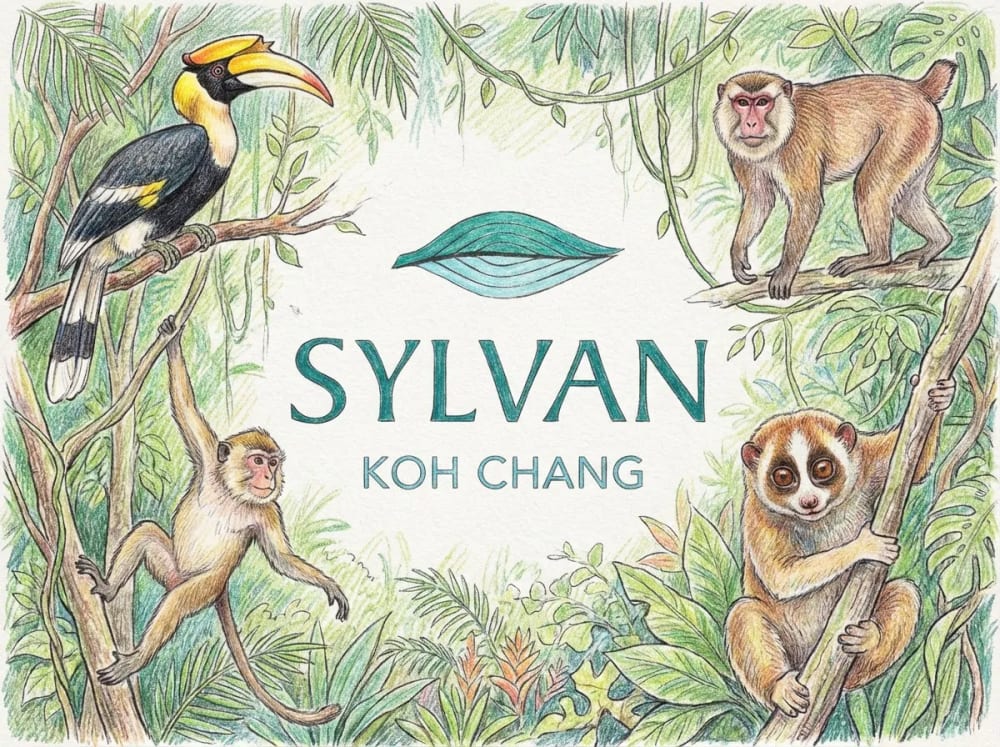
Meet the Locals of SYLVAN Koh Chang: A Wildlife Guide for Guests
Koh Chang is renowned not only for its azure seas and pristine beaches, but also as one of Thailand's richest tropical rainforest ecosystems. Nestled within Mu Ko Chang National Park, SYLVAN Koh Chang offers every guest a rare opportunity to encounter wildlife in its true natural habitat. They were here long before any of us — we are simply guests in their home.
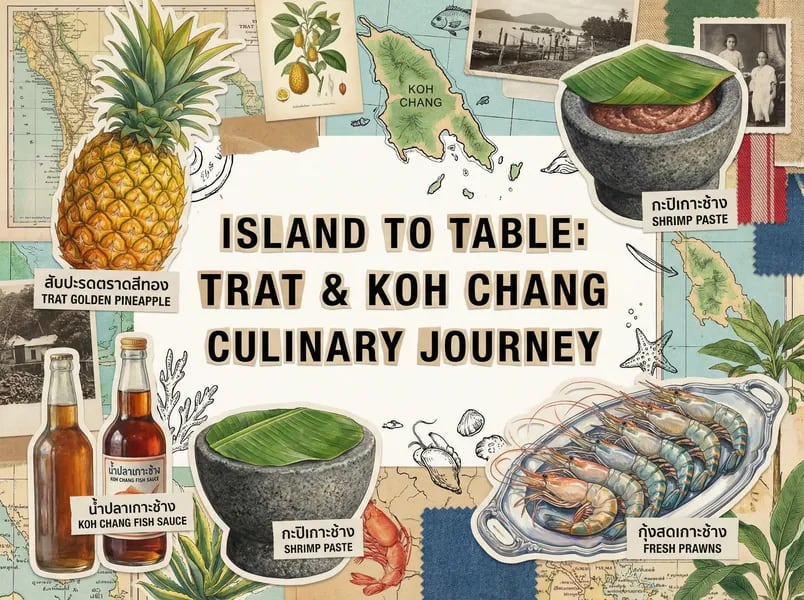
Island to Table: Where Koh Chang Comes Alive on Your Plate at Sylvie Cafe
At Sylvie Cafe, Koh Chang, we hold one simple belief — everything placed on your table should tell the story of this island. From the waves that lap the shore to the pineapple fields on the hillside, that is the essence of our "Island to Table" philosophy.

Khanom Krok: The World's #1 Thai Dessert, Made with Koh Chang Coconut at Sylvan Koh Chang
Khanom Krok — a beloved Thai classic that locals have grown up eating for as long as they can remember — has just been ranked by TasteAtlas as the #1 Thai Dessert in the World for 2025/26, placing 24th in the Top 100 Best Desserts in the World based on over 97,000 votes from users worldwide. But the Khanom Krok you'll find at The Clifftop, Sylvan Koh Chang is no ordinary coconut pancake.